Medieval Clasped Hands Ring with Amethyst, 14th-15th Century AD
A narrow round-section hoop with delicate clasped-hands motif modeled in the round to the underside, bezel formed as two hands supporting a bowl with coronet ornament to the top forming a claw setting for a polished conical amethyst. 2.26 grams, 27mm overall, 17.51mm internal diameter
(Note: In the photos it looks like a garnet but it is indeed an amethyst. See it in 360°
Please, please do not repost on this site or other sites, print with the intent of profit or distribute these illustrations without the explicit consent of myself, the artist. Wallpaper can be found here and here.
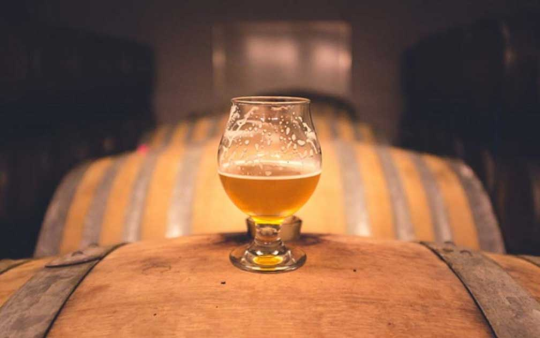
In some of the latest news in archaeology, a bronze cauldron was discovered inside a burial plot from 400 or 450 BC in Germany. The walls of the vessel contained precious remnants of an old drink recipe. Now, researchers have managed to recreate the ancient brew.
Here’s the important bit – the ingredients and how it tastes.
“Paleobotanical analysis of the vessel’s contents allowed the researchers
to discover the ingredients of the brew’s recipe. They found that it
was made up of yeast, barley, honey, meadowsweet, and mint.
….research was continued in Milwaukee’s Lakefront Brewery,
where the cellarmaster Chad Sheridan (an
expert in homebrewed meads) helped re-create the process of preparing
the ancient drink …
His result was a smooth and pleasant drink which has been described
as tasting like a dry port, but with a herbal minty tinge (and) an [alcohol by volume] of over 8 percent.
…adding honey at this stage would
probably make it more drinkable for [today’s] mead imbibers, we decided
to leave it as is.”
Sounds very pleasant.
I’d second the “no extra honey” – a lot of modern commercial meads are too sweet (Bunratty here in Ireland, for instance). It’s like putting sugar on a bowl of pre-sugared cereal
such as Frosties or Ricicles (or Calvin’s favourite Chocolate Frosted
Sugar Bombs – to which he often adds extra sugar because “they’re kinda
bland” without it). I sometimes wonder if customers are reluctant to accept a honey-based drink that tastes dry.
Defunct company Penlyn Mead of Cornwall used to make the best mead I’ve ever encountered.
It didn’t involve anything besides water, honey, yeast, time and skill.
The drink was bottled out at 13% abv, (red wine level)
and though the honey scent and flavour remained, there was no cloying sweetness since
a higher proportion of the sugar had become alcohol.
Writer Note: (for interesting names) Mead with added grape juice is “pyment” (pih-ment? pie-ment? pee-ment?); with added berry juice is “melomel”; with added herbs and/or spices is “metheglin”.
I’ve seen the word “metheglin” written before and I love it; it seems to promise so much mystery.
Whenever I saw the dragons ilustrated by Tolkien, I couldn’t help but seeing the resemblance with eastern dragons. Mostly because of those long and stylized bodies. I know he probably had in mind regular european dragons, but I thought it would be fun depicting Glaurung differently than usual.
a form of song used in some provinces in Norway and northern Sweden, primarily by women, to communicate to each other and to call livestock down from high-mountain pastures. kulning can belong to families, who have their own tones and melodies, and are passed down from relative to relative– the animals of families can recognize these calls and respond to them, and often the bells they wear are tuned to the kulning itself, making it easy to hear them coming down the mountainside and distinguish which homestead they belong to.
i first heard this type of music on a livestream and i have been captivated ever since. i thought it was a beautiful and perfect example about how music is integral to our lives and how it runs through every part of our history and is used in every way for almost any and every purpose.




 MisbehavingMaiar: Tumblr Archive