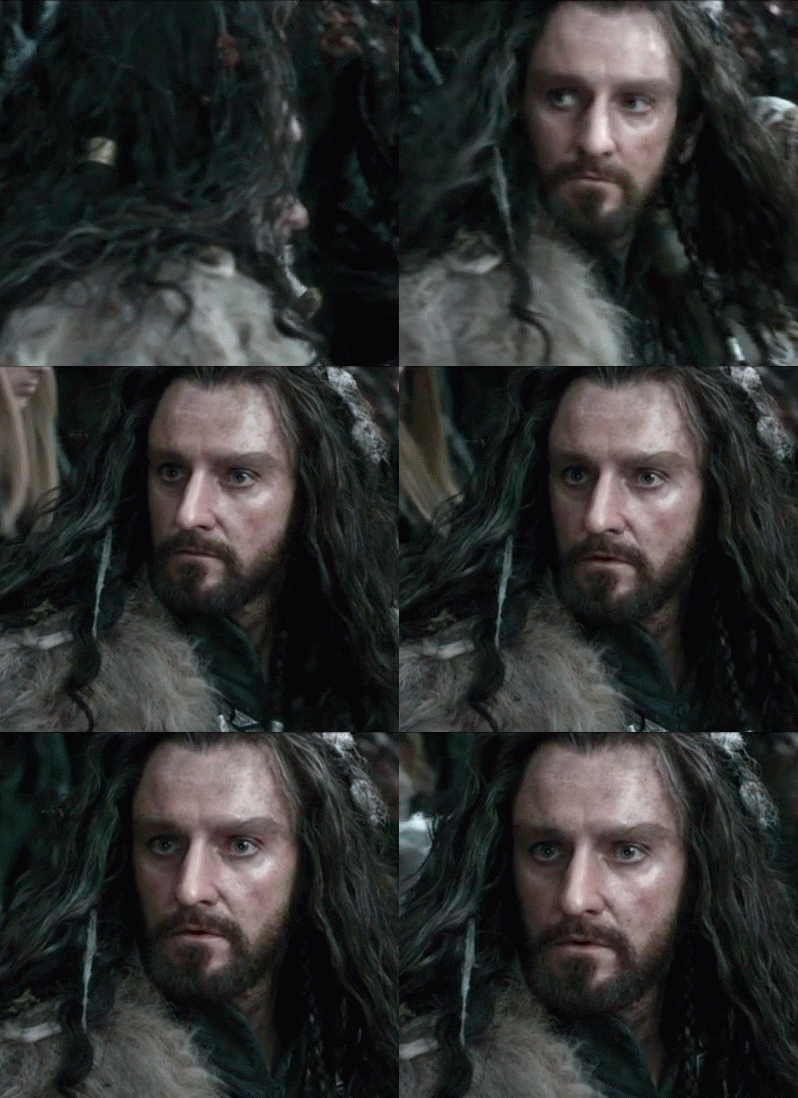
But have you considered: Thorin might be nearsighted?
Case in point:
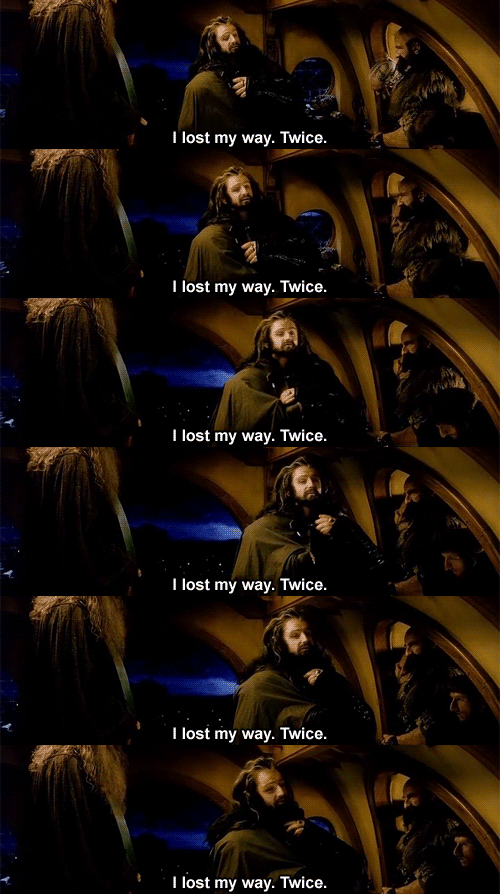
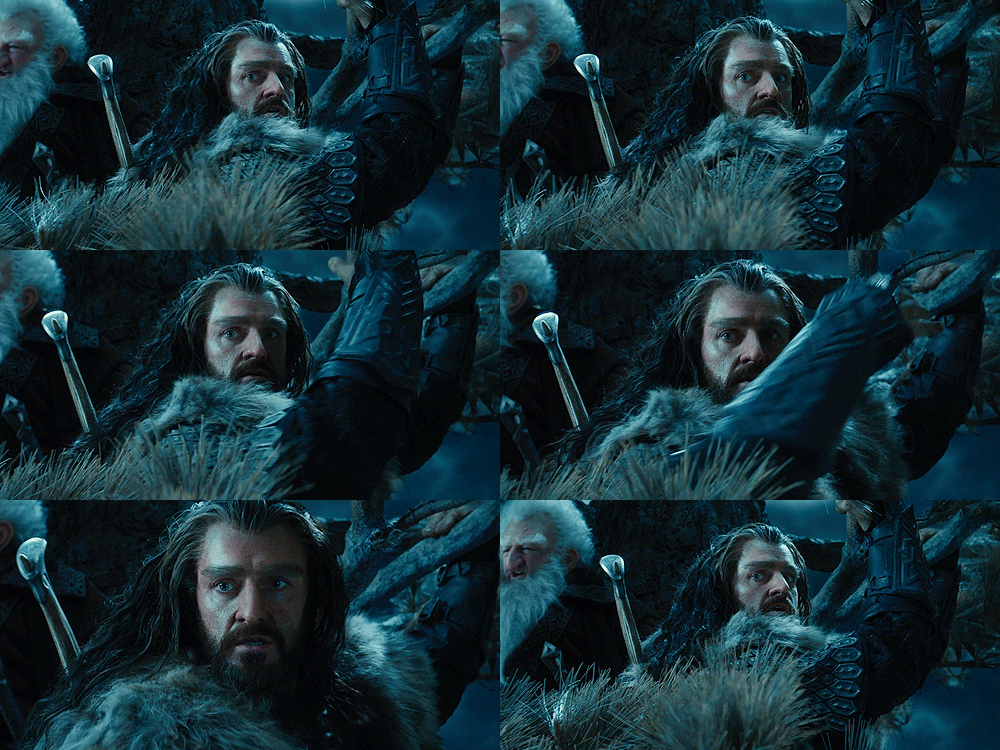
Exhibit 2
“It cannot be.”aka Doesn’t actually recognize Azog until he starts talking…
This needs no explanation:
*BOOM*
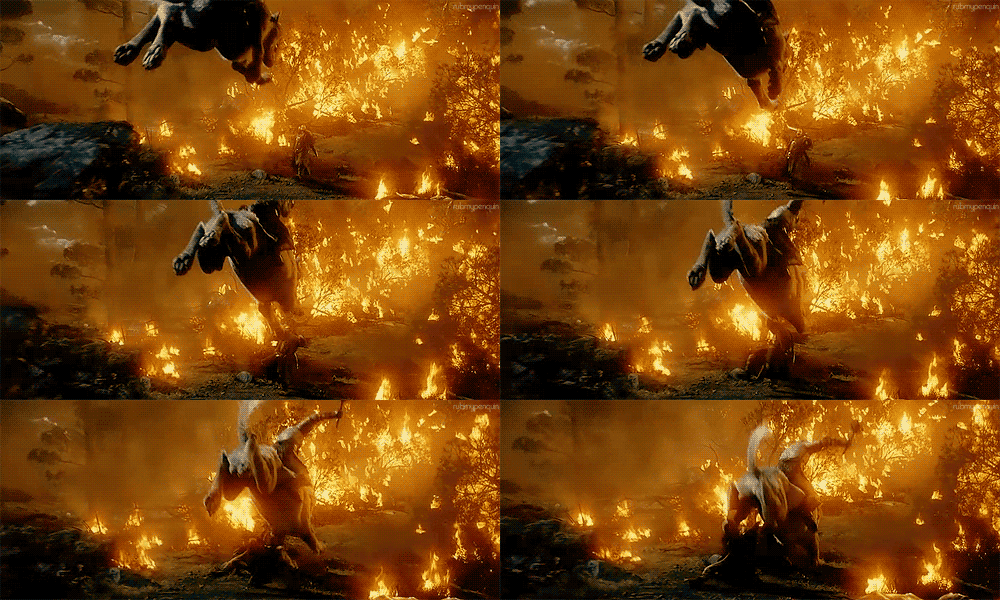
Exhibit 3:
Not subtitled, but Thorin shouts for Kili when actually Fili is the one who was almost crushed >.<
Exhibit 4
Not pictured because I couldn’t find a gif, but Thorin prompting Balin to lead them out of Rivendell because he “can see knows these paths”
Exhibit 5
Cut off Azog’s arm, was probably aiming for something slightly more fatal, couldn’t tell he was alive when dragged back inside Moria…
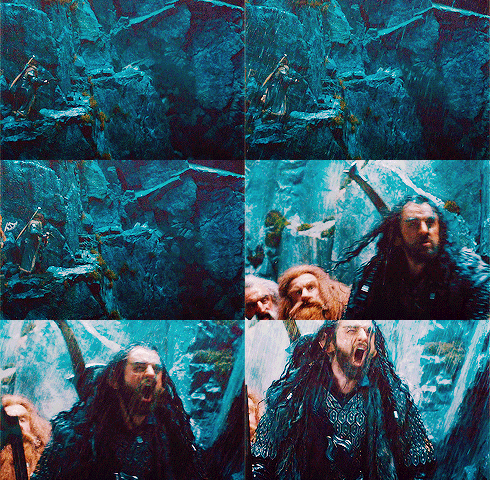
Exhibit 6
WHERE’S BILBO?
(”I have no idea because I can’t see for shit.”)
Conclusion:
Since wearing glass in front of your eyes is slightly more of a liability for a fighter than people’s faces being slightly blurry, I’m just gonna throw this out there as a possible explanation for fandom to run with 😉
Ok but I think this is my favorite post of mine that’s done well because
1) it give a humorous explanation for Thorin’s random moments of fail that’s cracky and funny
2) it actually kinda makes sense and it gives Thorin a minor (or not so minor for his life and world) disability that he works around and actually kinda explains said moments of fail realistically and honestly guys the more I think about it and replay the movies in my head the fewer contradictions I can find for this headcanon???
There is a fanfic in here somewhere
Convincing arguments!
Thorin has suddenly become more human and more pleasant (short-sighted person speaking here)
You are not wrong OP, Thorin IS nearsighted. In the book, it was even canon:
“How far away do you think it is?” asked Thorin, for by now they knew Bilbo had the sharpest eyes among them. “Not far at all. I shouldn’t think above twelve yards.” “Twelve yards! I should have thought it was thirty at least, but my eyes don’t see as well as they used a hundred years ago-” (From the chapter, ‘Flies and Spiders’
of The Hobbit, by JRR Tolkien
)
Thorin isn’t just slightly nearsighted either, he thought a large object at across-the-street distance was three-quarters of the length of a football field away. By modern standards he would be legally, coke-bottle-glasses-or-we-don’t-let-you-drive, blind.
In the movie Thorin’s nearsightedness is never actually stated, but I love the clever ways in which they worked it into the acting (as avelera highlighted very well), and also into the costume and set design (implying that Dwarves tend to be nearsighted in general): Dwarven ornamentation is always three-dimensional, be it stamped leather, cut runes, thickly-embroidered brocade, or cast-metal beads. There are no purely painted or smooth-inlaid designs anywhere that would require sight, let alone 20/20 vision.
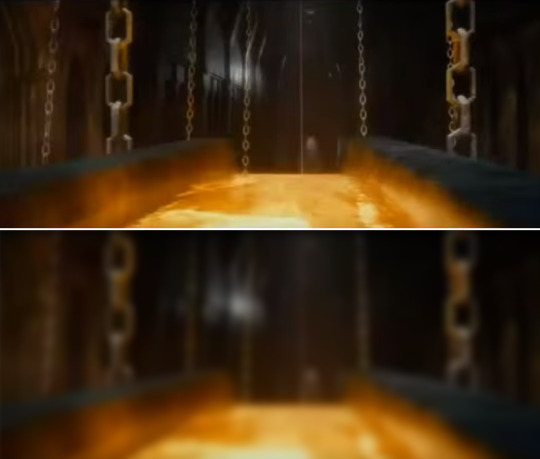
Dwarven cities too, are violently three-dimensional and ornamented with a lot of straight-lined geometry and gigantic statues. Perhaps most telling of all, the terrifyingly high stone bridges found in both Erebor AND Moria are treated as perfectly ordinary sidewalks… which would make sense for a race that couldn’t even SEE the ground below.
Something that I noticed really irritates me is the stunning lack of research in the Tolkien fandom regarding The Hobbit trilogy and how they pin the blame for everything on Jackson. But as I discovered over the past three months, there’s a bigger story. The trilogy had one of the most nightmarish productions in recent memory and all of it is Warner Bros. and New Line Cinema’s fault.
The first problem emerged in 2008 when New Line Cinema and Warner Bros. refused to pay the Tolkien Estate the money that they owed them (including for The Lord of the Rings). What followed was two and a half years of everything spiraling out of control, not only sending the film into Development Hell but causing Guillermo del Toro to leave production after having been attached to it. To make matters worse, these legal issues got so bad that it would have taken the production out of New Zealand entirely. Only when Peter Jackson decided to come back to the director’s chair in late 2009 was everything sorted out.
And then the studio only gave Peter Jackson and Weta six months of pre-production and told him to start filming immediately afterwards or else. And before production could even begin, Jackson was hospitalized in January 2011 for a perforated stomach ulcer, which eerily was one of the contributing causes of Tolkien’s death. Luckily, it was caught in time and surgery went smoothly. This, however, forced production and principal photography to be halted for a month.
Filming itself went smoothly for the most part until the decision was made to split it into three movies instead of two. The sound designers, mixers, and editors had to create and edit new sound effects halfway through doing the second film. Then there was the decision to CGI Azog, Bolg, and the orcs in the first and second films, with the decision with Bolg being made so suddenly that whole sequences had to be re-shot, which is why in the trailers Azog is the one chasing the dwarves but in the film it’s Bolg.
Another piece of evidence of the suddeness of switching from two movies to three: the scene where the group tries to bury Smaug in gold in the forges was added only because the filmmakers needed a cliffhanger (they confirmed this when asked) and the actors and some of the crew literally had no idea what they were filming until the finished film.
The romance between Kili and Tauriel was always intended to be in the film from as early as 2010 with her relationship with Legolas being strictly platonic and more like a brother and sister. But when re-shoots were done to turn it into three films, the studio forced them to write Legolas into the love story and turn it into a love triangle. Both Evangeline Lilly and Peter Jackson have admitted they hated the idea of a love triangle and just wanted to tell a simple love story. This is also evidenced in the healing scene in Laketown. In the original script, she healed one of Bard’s daughters (most likely Tilda) but when re-shoots happened it was changed to Kili, which coupled with the aforementioned Bolg switch suddenly explains Kili being hit with an arrow.
When it finally came time to do the third film, the studio practically took the film away from Jackson and forced him to edit it in a way he didn’t approve of and imposed tons of baggage onto film, demanding more emphasis on the love story and possibly more Alfrid scenes.
All of this ended up blowing up in Warner Bros’ faces and while the trilogy did do well, it became a Base Breaker for audiences and critics and the Tolkien Estate has relinquished the film rights to the books until further notice. All the aforementioned meddling was confirmed not just by Peter Jackson but also by Graham McTavish and Evangeline Lilly, with McTavish confirming the theatrical cut for the third film isn’t what was intended and that the extended cuts of all three films are closer to Jackson’s original intention.
Yikes. Now you know all this, I hope you at least are aware of what was going on behind the scenes. Thank you.


 MisbehavingMaiar: Tumblr Archive