In Norse Mythology (and indeed also modern folk belief), the way in which humanoids can posses wings, fly or literally transform to a bird is to undergo a feathered transformation known as Fjærham/Fjederham (in modern Scandinavian tongue) or Fjaðrhamr (in Old Norse). Fjær/fjeder/fjaðr means “feather” and ham/hamr means the form or shape. So it literally translates as “feather-form”. The most prominent examples of “feather-form” are Freya’s feather cloak, which is used by Loki in Þrymskviða, the Norns who are said to transform into swans to travel midgard and the hero, Germand Gladensvend, from the Danish folk ballad of the same name.
like look at Smaug, look at his ears, DON’T YOU JUST WANT TO SCRATCH BEHIND HIS EARS AND TELL HIM HE’S A GOOD BOY
and look at this guy, I guess he’s supposed to be ferocious but it looks more like “whoa man chill out, I’m just saying that those shoes with that helmet was maybe not the greatest fashion decision, just a little friendly advice, no need to get defensive.”
THIS LITTLE BB ALL CURLED UP AND TAKIN’ A NAP
I want this one to live in my pocket and be my sassy talking dragon sidekick
SO SMILEY!! “gonna go terrorize some helpless villagers aw yiss”
but my favorite is this little doodle here
just look at him
LOOK AT HOW HAPPY HE IS
Tolkien’s dragons are fascinating (and very cute indeed) although not so surprising considering his knowledge in European Middle-Age. Before the discovery by European people of Chinese dragons through the imports of goods from China, dragons in Anglo-Saxon bestiaries (inspired by Germanic traditions) were more like huge worms, with or without wings, and their most dangerous features were their velocity and rapidity rather than fire, and their tail was usually more dangerous than their teeth.
That’s the kind of dragons we have in Beowulf or in the Nibelungen for instance, or in representations of Saint Margaret (The dragons with Margaret sometimes look rather ridiculous and I lovethem)(There is a nice collection here). (I mean, look at this ferocious beast:)
Book of Hours, St. Margaret, Walters Manuscript W.168, fol. 222r by Walters Art Museum Illuminated Manuscripts – 15th century (x)
Dunois Book of Hours, France (Paris), 15th century, Yates Thompson MS 3, f. 282v (x)
So yes, Tolkien’s tiny dragons are not only lovely, but also quite relevant of his primary sources of inspiration, which makes them even more interesting 😀
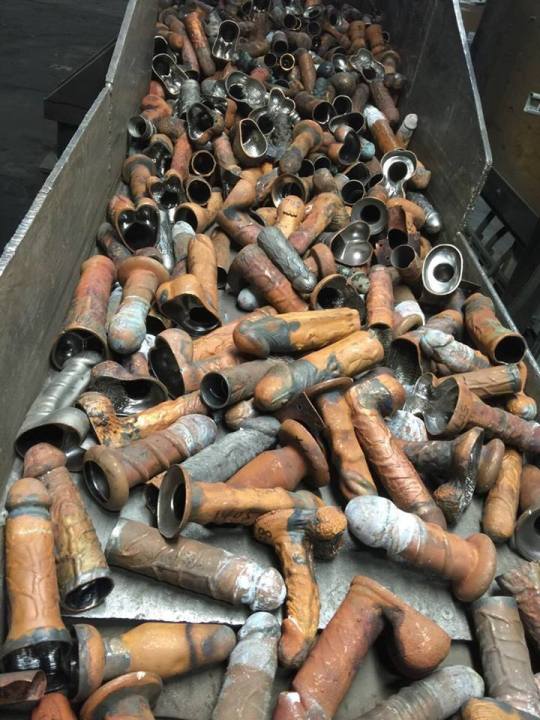
Friend of a friend on facebook posted a picture with a caption “Someone in my smithing group got a free crate of high quality steel today in the form of “used casting molds”… I am at a loss for words.”
It’s dicks. A big box of metal dicks. Dildo molds. Just, hundreds of them.
And I can’t share it because I have family on facebook. And I’m not sure if I should repost it here because … they’re not my metal dicks.
But you should all know that there exists a big box of metal dicks that are probably going to be melted down into, I would hope, one giant metal dick.


 MisbehavingMaiar: Tumblr Archive